Jurrasic World: From Imagination to Screen
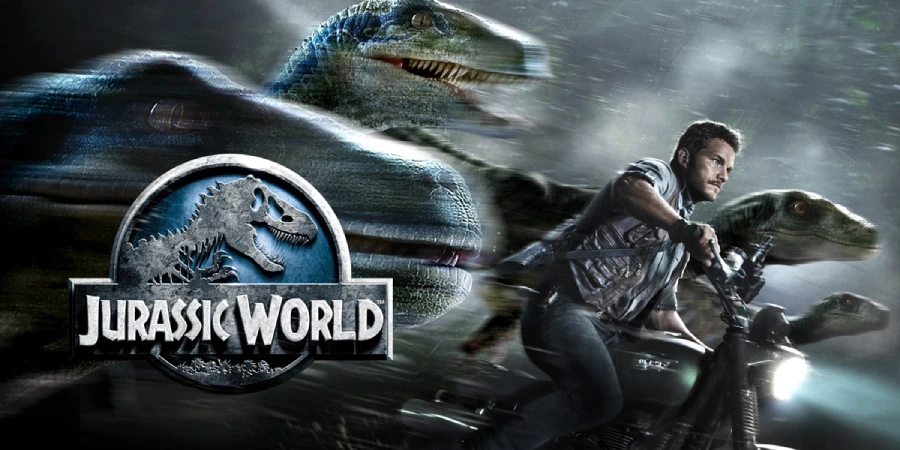
Jurrasic World 2015, From Imagination to Screen. A theme park showcasing genetically-engineered dinosaurs turns into a nightmare for its tourists when one of the dinosaurs escapes its enclosure. An ex-military animal expert steps up to save the day.
The park is incredibly successful, but every so often, they have to introduce more dinosaurs, a new attraction, or make improvements to the park to keep customers satisfied and visitor numbers high. Jurassic World’s latest plan to increase visitors to the park, keep people stimulated and maintain the wow factor is done by creating an entirely new dinosaur altogether: the Indominus Rex.

A world where dinosaurs and humans coexist. An idea that might only exist in the wild imagination of a child or a daydreaming paleontologist. However, Jurassic World takes that imagination, gives it a scientific foundation, and brings it directly to our movie screens.
Jurassic World is a dinosaur movie that became so popular it was the second highest-grossing film of 2015. It was directed by Colin Trevorrow, who also directed Star Wars: The Rise of Skywalker. The film also stars Chris Pratt, who won an MTV Movie Award for Best Action Sequence. In addition, the film was a box office success, grossing over $1 billion worldwide.
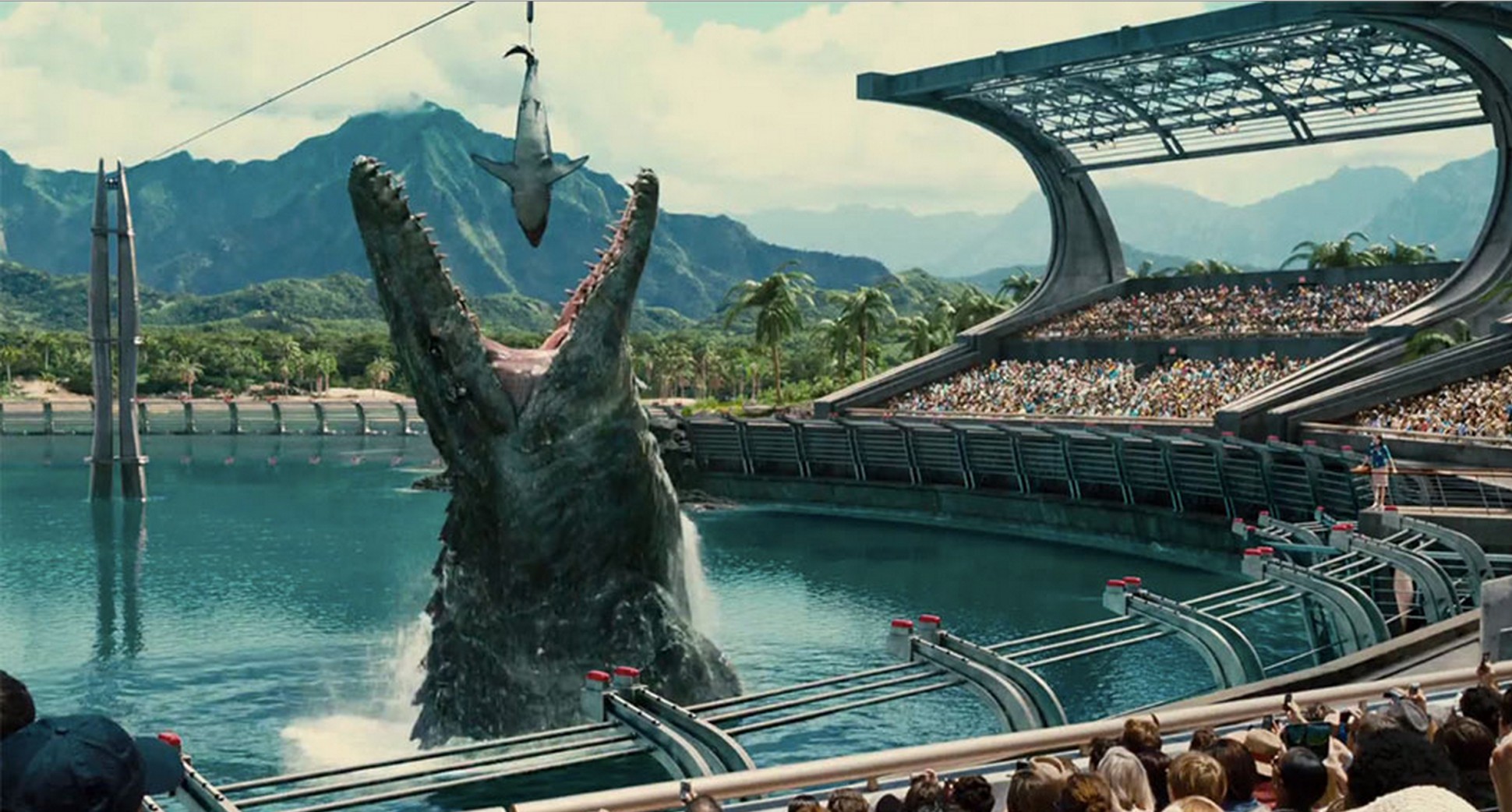
Imagination as a Driving Force: Why Are Dinosaurs So Fascinating?
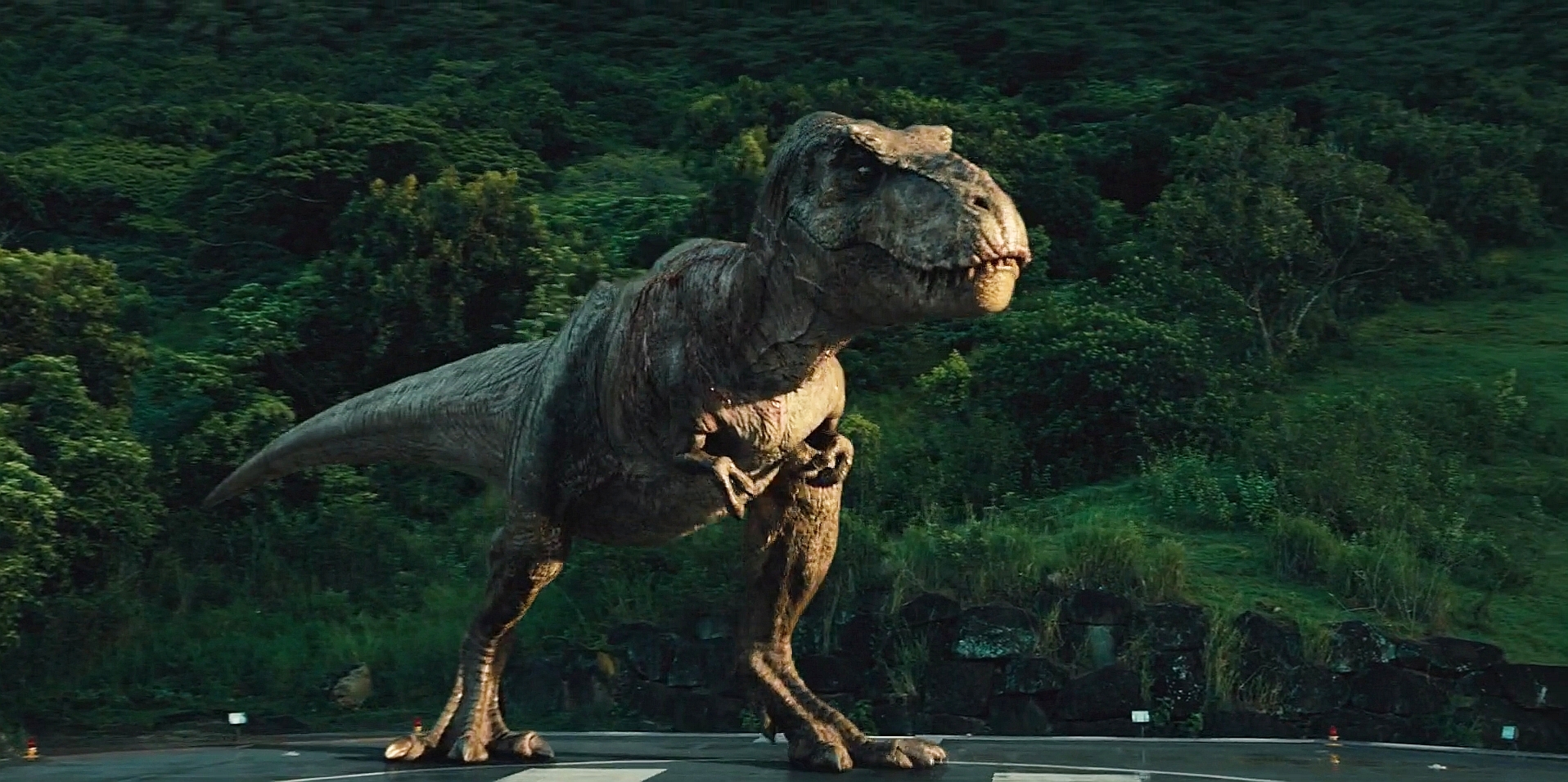
Since childhood, Tyrannosaurus Rex have always been frightening yet fascinating creatures. However, they are only skeletal remains lying in museums. The idea of bringing them back to life is a collective dream fueled by human curiosity.
Many people, from the young to the old, love dinosaurs, not only because they look cool, but also because dinosaurs are a biologically interesting scientific subject that attracts researchers. Studying how they lived and how they survived in the ancient world also makes them an interesting subject of study.
Long before this film existed, even since the discovery of fossils in the Victorian era we have been captivated by these giant creatures. They are symbols of lost natural power, evolutionary puzzles that have not yet been fully solved. The desire to bring them back to life is not merely science fiction but also an expression of human ambition and arrogance.
Jurassic World captures this desire and places it in a modern context. The film imagines a world where we have not only succeeded in controlling nature, but also improving it creating new species that are bigger, smarter, and, ironically, far more dangerous. It is no longer about science for progress, but for entertainment and profit, reflecting an era where science and business often overlap.
Jurassic World not only replicates this dream, but also gives it a narrative. It imagines a world where we have succeeded in controlling nature, combining ancient DNA to recreate creatures that became extinct millions of years ago. This film is a visual representation of human ambition our desire to exceed limits, even if it means playing with the laws of nature.
The Science on Screen: Exploring the Boundaries of Fiction

In the film, this plot makes perfect sense. We see Dr. Henry Wu (played by BD Wong) talking confidently about genetic engineering and creating “hybrid” species such as the Indominus Rex. The process is made to look simple: take DNA from mosquito fossils, fill in the genetic gaps with DNA from frogs or other animals, and voila, we have a dinosaur.
However, in reality, this is something that would almost never happen, even with the most advanced technology available today. Combining DNA from creatures that lived hundreds of centuries ago has not been proven to be possible in modern times.
This is the magical moment of a science fiction film. Jurassic World does not have to follow strict scientific rules. Instead, it creates its own rules. It removes real-world obstacles like DNA degradation over millions of years or complex ethical challenges. Its goal isn't to teach biology, but to build a world that our imagination can believe in, where feels like real.
The cinematic magic of Jurassic World lies in its ability to make highly complex scientific processes seem simple and plausible. However, behind the convincing narrative, the film deliberately ignores major real-world obstacles. For example, the film assumes that dinosaur DNA can be found intact in mosquito fossils, when in reality DNA is a very fragile molecule and it is impossible for it to survive millions of years. In addition, the film fills the genetic gap with frog DNA, when in the real world, inserting DNA from a different species would result in genetic chaos, not a complete creature.
Ethical Mirror: The Consequences of Playing with Nature

More than just a thrilling adventure, Jurassic World is an ethical mirror. The film serves as a visual metaphor for the dangers of uncontrolled innovation. The destruction caused by the Indominus rex a species designed by humans is a manifestation of our failure to consider the moral consequences of our actions.
More than just a thrilling adventure, the film serves as an ethical mirror that is relevant to current issues. Jurassic World visually poses big questions: should we do everything we can do? How do we balance the potential financial gains with our ethical responsibility towards our creations? And, most fundamentally, do genetically engineered creatures have the same rights as other living beings? Through inevitable destruction, this film shows that even though our imagination can bring the past to life, we must be prepared to face the consequences that will shape the future.
By making changes to the current environmental ecosystem, we will face other impacts. As seen in this film, where the dinosaurs created turn against us because the environmental ecosystem is contrary to the present.
Dinosaurs Mixed with Action

His actions in the film also create a tense atmosphere related to controlling the raptors, showcasing his leadership, control, and skills as an expert in the field of dinosaurs. In addition, his actions during the chase with the Indominus Rex give the audience a thrilling sensation, as if we were really being chased outside the screen.
Overall, Chris Pratt's contribution to Jurassic World as an action film lies in his ability to bring military skills and emotional connection to scenes filled with physical tension and prehistoric danger. He adds a human touch to the large-scale destruction.

Ultimately, Jurassic World successfully transformed imagination from fantasy into a powerful cinematic experience. This film is proof that science fiction is not only about realizing the impossible, but also about exploring the challenges, failures, and moral dilemmas we would face if it really became a reality.

honestly jurassic world is great but later entries is questionable
ReplyDeleteSuch a cool dive into how imagination turns into epic dinos on screen! 🦖🔥
ReplyDeletedinosaur is crazy
ReplyDeleteim scared of this dino in here
ReplyDeleteim sad because this seeries not continue
ReplyDeletedino always the craziest reptils
ReplyDeleteI always felt dinos might belong in a museum but the movie gave them claws and chaos, and I’m here for it.
ReplyDelete
ReplyDeleteThe article nailed it: the science behind the film is total sci-fi, but it works as a fun “what-if.”
Watching humans messing with nature never ends well — the ethical angle hits harder than T-Rex’s bite.
ReplyDeleteI love how the article reminds us that dinosaurs aren’t just “cool monsters,” but symbols of power that lost for a reason.
ReplyDeleteThe article’s breakdown of “why dinos fascinate us” really resonated childhood awe turned cinematic terror.
ReplyDeleteThis write-up makes me hype to rewatch Jurassic World but now with more respect (and fear) for the dinos
ReplyDelete